
How to Choose a White Label UCaaS Partner — And Why the Wrong Choice Quietly Kills Your Margin

If you’re an MSP or telecom reseller evaluating white label UCaaS platforms, you’ve probably already sat through a few demos. And if the demos looked similar, that’s by design. The real differences don’t show up in a feature walkthrough. They show up after your first 30 customers, when billing gets complicated, when AI tools that […]
Why Recurring Revenue Alone Isn’t Enough to Stabilize Growth

For MSPs, VARs, and telecom resellers, the limitations of one-time revenue are easy to recognize. A large project closes, revenue spikes, and for a moment the business feels ahead. But once the work wraps, that momentum disappears, and the pressure to fill the pipeline returns. Growth becomes tied to what closes next, not what carries […]
Cutting-Edge UCaaS Technology Built for Your Success

Since 2010, White Label Communications has been revolutionizing UCaaS cloud communications with a 99.999% uptime SLA, delivering unparalleled reliability and scalability to partners worldwide. Our proprietary platform, built on FreeSWITCH, empowers Managed Service Providers (MSPs), VARs, Office Technology Dealers, and Broadband Providers to offer private-labeled VoIP and UCaaS solutions under their own brand—without compromise. Why […]
Voicemail Phone Number Playback

A Practical, Yet Powerful Voicemail Management Capability White Label Communications is pleased to announce a new feature for voicemail playback that is designed to improve voicemail workflow and enhance end user experience: Voicemail Phone Number Playback. This capability is an especially useful feature for end users who are primarily retrieving voicemail messages through their desk […]
SIP Trunking: A Comprehensive Guide
Understanding SIP Trunking Session Initiation Protocol (SIP) trunking has swiftly become the predominant choice for IP-based communication systems, effectively supplanting traditional Primary Rate Interface (PRI) trunks. This innovative technology enables the connection of Private Branch Exchange (PBX) systems to the Public Switched Telephone Network (PSTN) through an Internet Protocol (IP) network. By utilizing SIP, organizations […]
The Evolving Landscape of Unified Communications in 2025

The concept of Unified Communications (UCaaS) continues to evolve, pushing toward deeply integrated communication ecosystems. At its core, UCaaS aims to seamlessly combine real-time and non-real-time communications, empowering users with smooth access to information and collaboration tools. Imagine communication workflows that move fluidly from video calls to collaborative document editing, and then onto summarized points […]
Automatic Call Distribution (ACD)
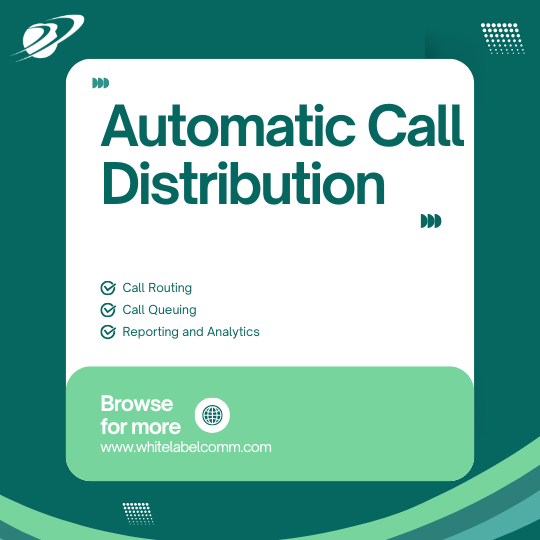
Automatic Call Distribution (ACD): Streamlining Call Management
Automatic Call Distribution (ACD) is a telephony system that automatically routes incoming calls to specific agents or departments based on predefined criteria.
Understanding Automatic Call Distribution
Automatic Call Distribution is essential for managing high volumes of incoming calls efficiently. By using ACD, businesses can ensure that calls are directed to the most appropriate recipient, improving customer satisfaction and operational efficiency.
The origin of ACD systems dates back to the 1970s when businesses began to recognize the need for sophisticated call management solutions. Today, ACD technology is integral to call centers and customer service departments, allowing them to handle customer inquiries, support requests, and sales leads effectively.
Key Components of ACD
ACD systems consist of several key components that enhance their functionality:
1. Call Routing
ACD systems utilize various routing methods, such as round-robin, longest idle, or skill-based routing, to ensure that calls reach the right agents based on their expertise and availability.
2. Call Queuing
When all agents are busy, ACD allows calls to be queued, informing callers of their position in line and providing estimated wait times.
3. Reporting and Analytics
ACD systems offer detailed reporting and analytics features that help businesses track call volumes, agent performance, and customer satisfaction metrics.
Real-World Applications of ACD
Automatic Call Distribution systems are widely used across various industries, including:
- Telecommunications: Managing customer support calls and technical inquiries.
- Healthcare: Routing patient inquiries to the appropriate medical staff.
- Retail: Handling customer service calls related to orders, returns, and inquiries.
- Finance: Directing calls to financial advisors or support agents based on customer needs.
By implementing ACD, organizations can significantly enhance their customer service operations, reduce wait times, and improve overall efficiency.
Conclusion
In summary, Automatic Call Distribution is a crucial technology for businesses that handle a large volume of incoming calls. By automating the call routing process, ACD not only improves customer experience but also optimizes resource allocation within organizations. As communication needs evolve, ACD systems will continue to play a vital role in effective call management.
UCaaS vs CPaaS: Tools for Seamless Communication, Inside and Out

As experts that work with clients and their customers every day, we can all agree that seamless communication is essential. That’s where CPaaS (Communications Platform as a Service) and UCaaS (Unified Communications as a Service) come in. Much like the evolution of a thriving ecosystem, CPaaS and UCaaS developed to meet specific communication needs—empowering cost-effective, […]
Big Changes for 3CX Resellers

3CX has informed their resellers they are no longer supporting a base package of 4 simultaneous channels per PBX. Moving forward 3CX requires a minimum of 16 channels, thereby forcing clients to overpay for unnecessary channels. This requirement will hinder 3CX resellers from selling to their SMB customers. White Label Communications’ private label business model supports […]
Cloud PBX: A Modern Approach to Business Communications

Cloud-based Private Branch Exchange (Cloud PBX) has revolutionized the way businesses communicate. By leveraging the power of cloud technology, Cloud PBX offers a flexible, scalable, and cost-effective solution for businesses of all sizes. What is Cloud PBX? Cloud PBX is a phone system hosted in the cloud, eliminating the need for on-premises hardware. It enables […]